The Jungle Grows: The Death of Charlie Kirk and The End of Reason
On Trumpism, Ortega, and the Decline of the West
On Trumpism, Ortega, and the Decline of the West
Before we begin: In the spirit of what this piece is trying to say, I should at the outset acknowledge that I write from within a philosophical and theological tradition that not only values – but actively endorses – pluralism, paradox, surrender and grace. I am not neutral. But I am striving to be honest and, like José Ortega y Gasset, I hold a deep commitment to the dialogical structures of democracy. This was written quickly, in grief, shock and frustration. It’s not perfect, but it’s real. Make of that what you will.
Prelude: The Decline of Meaning
I’ve watched Charlie Kirk for years. Not religiously. Not because I agreed with a lot of what he said. But because as a symbol and almost perfect example of the modern political celebrity, he was fascinating. As an event, his brutal killing has poisoned the well of opinion; it has forced people into believing that to sit on the fence is to die, to pick a side is to survive. I’m not concerned about this ideological or moral posturing. It is September, 2025. To say ‘no one deserves to die’ in today’s climate is borderline meaningless. Let’s be frank, everyone knows this is true. Yet people keep dying. The left will march. Nothing changes. The right will march. Nothing changes. The politicians will ‘stand in solidarity’. Nothing changes. The Churches will pray. Nothing changes. Instagram will explode. And yet – nothing changes.
In the aftermath of this monstrous event, I’m done thinking in terms of good and bad, or right and wrong – not because these things are meaningless, but because this antiquated roundabout of incessant moralising seems tired and ineffective. It is not what will define this moment. Our grandchildren’s history books will not be concerned with who was right and wrong. If they are concerned with anything at all, they will be concerned with how this all came to be in the first place.
What makes this moment historical, is not its moral or political dilemma, but its philosophical one. This moment isn’t momentous because it reflects the nihilistic polarisation of current politics. It’s momentous because it represents the unravelling of the very foundations upon which politics are built. The collapse of the shared centres of meaning and language that once supported the humanity we supposedly cherish. This extends beyond politics, this moment is existential. And using history - and the work of José Ortega y Gasset - I’ll show you why.
Charlie Kirk: Facts And Feelings
After Kirk’s death a friend sent me footage of his Oxford Union speech and ensuing debate. It was a fascinating watch. Not fascinating because it was an academic display of intellectual rigour and political dialogue at its best (as you’d expect from the Oxford Union), but fascinating because it was a perfect spectacle of ideological sophistry. Everything Kirk said appeared to make sense. It worked. And most importantly, it made me -as a Brit - feel good.
His message was that Britain had lost its way; that the USA was rooted in the conservative backbone of Britain, the country that created brilliant men like William Shakespeare and Adam Smith. The country that ‘beat Napoleon’. He claimed that Britain disliked Trump because it had forgotten its past. He claimed that Britain needed to get back to its right-wing core, smash the left, and make itself great again. All this was delivered with Kirk’s trademark confidence, fiery disposition and passionate belief in his possession of a singular truth. And you know what, for a second….he had me. But just for a second.
You see, Kirk either hadn’t fully engaged with British history, or he was selectively leaving out a few things to suit his rhetorical needs. Yes, Adam Smith, the theoretical architect of capitalism, was British. But he was no populist and would certainly not adhere to Kirk’s reactionary brand of Christian Conservatism. Smith’s theory was rooted in the responsibility, self-awareness and dialogical truth-seeking that epitomised the Scottish enlightenment. He saw the free market not as a tool of dominance, but a mechanism for generating shared wealth within a framework of mutual benefit. Reinhold Niebuhr, in his seminal "The Children of Light and the Children of Darkness" puts it brilliantly:
Smith does not hesitate to make moral demands upon men to sacrifice their interests to the wider interests. The universalistic presupposition which underlies Smith's thought is clearly indicated for instance in such an observation as this: "The wise and virtuous man is at all times willing that his own private interests should be sacrificed to the public interest of his own particular order of society - that the interests of this order of society be sacrificed to the greater interest of the state. He should therefore be equally willing that all those inferior interests should be sacrificed to the greater interests of the universe, to the interests of that great society of all sensible and intelligent beings, of which God himself is the immediate administrator and director" (Smith, Wealth of Nations, Book V, ch.1, pt. 3). It must be noted that in smith's conception the "wider interest" does not stop at the boundary of the national state....Smith clearly belongs to the children of light. But the children of darkness were able to make good use of his creed...His vision of international harmony was transmuted into the sorry realities of an international capitalism which recognised neither moral scruples nor political restraints in expanding it's power over the world
He saw the need for the state to protect property and competition, and he saw migrants as important to keeping markets in relational flux. From reading The Wealth of Nations and his formative The Theory of Moral Sentiments, the suggestion that Smith would endorse the constructivist morality, protectionist tariffs, nativist migration laws, coercive foreign policy and the epistemic solipsism at the heart of Trumpism, is not just bad politics or historiography – it’s bad logic.
The Britain Kirk Forgot
This co-opting of Smith was just the beginning. Kirk’s reduction of British political and social history into a myopic, convenient conservatism is not only incredibly simplistic – but historically irresponsible, and arguably unethical.
Yes, Britain has a conservative past, but it also has a rich liberal and socialist one that Kirk conveniently ignores – possibly because it would complicate his argument. He doesn’t mention that Britain didn’t just beat Napoleon. It challenged the atomised individualism of the French Revolution from the get-go, foreseeing its collapse into chaos and authoritarianism. And it didn’t just create Shakespeare. It gave the world political radicals like Thomas Paine, William Cobbett and Mary Wollstonecraft. It gave us liberals such as John Stuart Mill, Charles Dickens and Bertrand Russell; progressives like Jane Austen, Aldous Huxley, George Orwell and Virginia Woolf; and socialists like Beatrice and Sidney Webb, Eric Hobsbawm, G.D.H. Cole and E.P. Thompson.
Even religious intellectuals such as C.S. Lewis, Kenneth Kirk and Rosemary Haughton helped shape a Britain not defined by dogma and rigidity, but by pluralism and paradox. These people didn’t just shape conservatism. They helped define and actualise modern democracy itself.
To support this political pluralism further, let’s remember that Britain also gave Marx and Engels the freedom and security to develop and publish some of their most influential works (“The Conditions of the Working Class in England” and “Das Kapital”). It birthed the Suffragettes, democratised trade unions, professionalised politicians, and gradually widened the electorate. It gave rise to democratic socialism – from Kier Hardie and Ramsay MacDonald to Clement Atlee, Ernest Bevan and dare I say it – Jermey Corbyn and Kier Starmer.
Kirk gladly celebrates Britain’s role in ending the Atlantic slave trade as an example of benevolent and conservative ‘Britishness’. But he fails to mention the fact that the orchestrators of abolition – Thomas Clarkson and William Wilberforce – were not defined by the conservatism, but by the radicalism of their day. He also conveniently omits Britain’s simultaneous imperial domination over a quarter of the globe and how this facilitated slavery on an industrial scale in the first place; or its orchestration of the Irish and Bengal famines; or its role in the invention of the concentration camp; or its appeasement of Hitler in Munich; or its devastating partition and catastrophic withdrawal from India. And let’s not forget: Adam Smith’s capitalist vision – rooted in moral responsibility - has been ideologically contorted (by the very likes of Kirk) into one of the most oppressive distortions of economic theory in history, rivalled only by the authoritarian co-option of Marx’s ideas under communism.
So what’s my point? Well it’s this: Britain has never been defined by its conservatism alone, and it’s never been ‘great’ in the simple, nostalgic way Kirk wants us to think. In fact, it’s been pretty awful. Since industrialisation, Britain has been defined by its constant teetering on the edge of collapse, contradiction and a pragmatic ability to navigate political and institutional stability and social progress whilst somehow avoiding bloody revolution. What defines Britain is not an inherent conservatism or socialism, but a resolute commitment to liberal democracy – to responsible discourse, critical reflection, self-correction, and the gradual evolution of a pluralistic society that works better than the last version.
Whether you think this system does work better, or is good or bad, is neither here nor there for this piece. The key point is that Kirk’s reductionism – his attempt to strong-arm Britain’s complexity into a conservative narrative – is deeply flawed and dangerously partisan. This manipulation of cherry-picked “facts” to supposedly counter mere “feelings” reflects the modern trend for anti-intellectual, performative politics – and a dishonesty anathema to dialogical progress. For this to come from such an admired and public figure as Kirk merely amplifies the cause for concern. To understand this phenomenon fully, we have to move beyond Kirk the symbol and deconstruct his method within a philosophical and sociological lens.
Enter José Ortega: The Revolt of Mass-Man
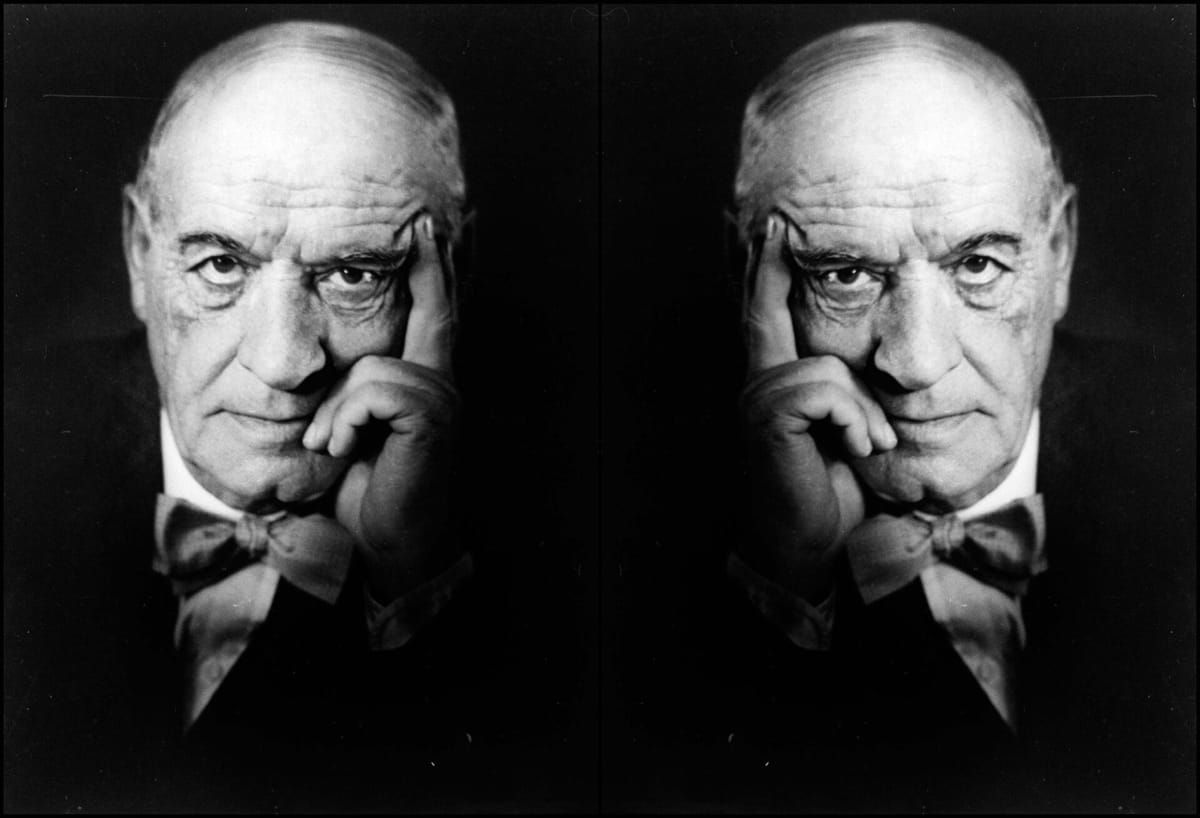
It was somewhat disconcerting for me that Kirk’s killing occurred just after I had finished reading José Ortega y Gasset’s The Revolt of The Masses. Ortega was a Spanish philosopher, a deeply committed liberal who found himself in an age of extremes. His reflections on the erosion of society, tied to the ‘mass-mans’ alienation from history, are staggeringly prescient. Ortega foresaw that the rise of consumerism and individualistic ideology would cultivate an ignorant and flippant relationship with civilisation – an ignorance of the hard-earned victories, the responsibility and the critical self-awareness required to sustain it.
For Ortega, the ‘mass-man’ inevitably drifts away from the ideals of liberal democracy - an awareness of the ‘other’ - and moves into a hermetically sealed void of anti-intellectual, anti-social dogma (think the ‘echo-chamber’). This ‘mass-man’ moves into an age of self-satisfaction, where the individual’s truth is no longer relative or shared, but the only one possible. In this world, self-selected ‘facts’ dictate reality, and slogans such as Kirk’s “facts don’t care about feelings” become epistemically definitive in an attempt to redefine solipsism, narcissism and ignorance as virtues. Because if indeed facts don’t care about feelings…does that mean we shouldn’t too?
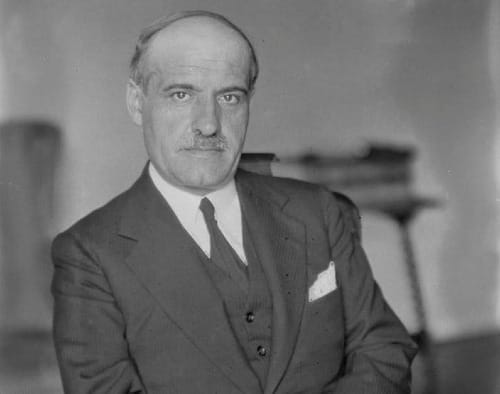
Ortega says it better than me, so I’ll quote him at length:
“If from the viewpoint of what concerns public life, the psychological structure of this new type of mass-man be studied, what we find is as follows: (1) An inborn, root impression that life is easy, plentiful, without any grave limitations; consequently, each average man finds within himself a sensation of power and triumph which, (2) invites him to stand up for himself as he is, to look upon his moral and intellectual endowment as excellent, complete. This contentment with himself leads him to shut himself off from any external court of appeal; not to listen, not to submit his opinions to judgement, not to consider others’ existence. His intimate feeling of power urges him always to exercise predominance. He will act then as if he and his like were the only beings existing in the world; and, consequently, (3) will intervene in all matters, imposing his own vulgar views without respect or regard for others, without limit or reserve, that is to say, in accordance with a system of ‘direct action’”
Sound familiar?
You see, Kirk was not a philosopher, historian, or theologian. He was an ideologue. His goal wasn’t the pursuit of truth, but to create digital content that affirmed the tribe. Short, tightly edited clips of ‘gotcha’ moments; highlight reels of Kirk ‘destroying’ another ‘woke college kid’; carefully orchestrated podcasts and interviews - all designed to do one thing: push his vision of populist conservatism, not test it.
He wasn’t interested in debate, but he created the illusion of it to give his position credibility. The context was always rigged. The conditions were always favourable. He battled down. He defined terms. He ignored rules of engagement. He knew what was coming, and he was always brilliantly prepared. The conversation was always theatre designed for mass consumption. That’s not debate - it’s propaganda. It’s anti-liberal, and therefore, in a sense, anti-British.
The most concerning thing here, however, is just how perfectly Kirk’s media persona embodied and symbolised Ortega’s anti-political, anti-intellectual and ultimately anti-human ‘mass-man’. Kirk the public personality reflected Ortega’s jungle – not just a return to dogmatism, but an embrace of the barbarism that undermines civilisation. Please don’t misconstrue me; I’m not trying to dehumanize Kirk. I can't say whether he battled with doubt and complexity in the privacy of his own mind. But from a philosophical perspective this isn’t really about Kirk the man (I will return to him at the end), or Trump, or Adam Smith. It’s about systems, symbols and the world-views they represent and reject.
Kirk and the Dialogical Illusion
Many will argue that Kirk was simply offering an alternative voice to increasingly left-leaning academic spaces, but this misses the deeper point. Kirk’s brand of institutionalised conservatism was not about intellectual balance; it was entrenched in opposition and anti-left rhetoric, as well as the methodological rejection of the orthodox liberal ideals discussed above. The problem with this is – as Ortega points out – that to be ‘anti’ something is not to offer a solution, it is a call to regress. To be anti-left is to resurrect the ideological ghosts that necessitated the left in the first place. Therefore, Kirk’s position is reaction, not construction. And it's certainly not the dialogical pursuit of truth that Kirk framed it to be.
This is most evidenced in Kirk’s famous rhetorical framing: “Prove Me Wrong”. Any sincere philosopher, theologian, psychologist, scientist – any sincere thinker will tell you: proof is a luxury mostly unknown to the critical mind. Kirk’s challenge to be ‘proven wrong’ within a public and digitally visible setting, alongside his reluctance to engage in an open and meaningful debate, signifies the closed-minded epistemology and unconscious dogmatism of Ortega’s ‘mass-man’. A persona confident in superiority, deaf to dialogue, and entirely immune to doubt.
Kirk’s public belief that his thought should become the thought of the masses - and that any opposition to this deserved not just refutation, but public humiliation – was not just a tactic for gaining YouTube followers. It was a symbolic vision of control, ideological dominance, manipulation and intellectual superiority – all intended to facilitate psychological splitting and entrench Kirk's conservative leaning viewers in his dogma. It was the exact political structuring that Kirk claimed – and more than likely believed – that he was combatting.
In an Aristotelian sense then, what is so tragic about the senseless murder of Kirk is that it is the modern event that holds a mirror up to each of us – and forces us to choose. Not between left and right. But between civilisation and the jungle. Between humanity and death. Between Ortega’s ‘mass’ and his ‘nobility’. Between Plato’s cave and the external world. Between becoming truly human - or disappearing into the void of barbarism.
How does Kirk’s death represent this? Well here’s the rub: his brutal, devastating and public execution was the logical pinnacle of performative politics. The tragic climax of the very culture he himself so effectively symbolised. A culture that prioritises content over substance; performance over paradox; domination over dialogue and followers over converts. Our culture.
The symbolic Kirk represented not just a brand, but an ontological position. A way of viewing the very nature of the world. And it was the sociopolitical environment created by this ontological position that facilitated the assassination of Kirk the man. Kirk’s killer took his logic and method, stripped it of morality, and pushed it into its most tribal, violent and conclusive form: the public silencing of opposing voices – with a bullet. And in typical mass-man fashion, it was all captured in a terrifying, heart breaking – and ultimate – ‘gotcha’ moment.
Kirk’s killer may have fulfilled this ontological narrative in a way that Kirk’s morality – and his humanity – could never allow, but Kirk and his killer were the product of the same culture. A culture in which every individual can state: “I am enough”. On the face of it, this is a beautiful and enlightening proposition. But in reality, it simply places the individual in perpetual opposition to the ‘other’. This abandonment of objective pluralism inevitably creates a culture that makes category mistakes between feelings and facts, ignoring or devaluing one or the other in the pursuit of psychological congruence. A culture that confuses emotional outrage with righteousness. A culture detached from any philosophical understanding of virtue. A culture alienated from its own humanity, locked in an Ortegan nightmare.
And that’s the challenge left to us - the same challenge Ortega gave in 1930: that this isn’t simply a political or social crisis – it’s an existential one. And it needs to be addressed. The world failed to listen to him then, will the world listen now?
Sadly, Kirk’s legacy will be one of domination, not dialogue – not because he was personally insincere or lacked conviction – but because he was unconsciously entrenched in a world-view shaped by Ortega’s ‘mass-man’. A world-view committed to spectacle over substance, conquest over conversation, certainty over humility, virality over virtue and colonialism over compassion. A world-view ultimately committed to humiliating and conquering the ‘other’. And so, tragically, Kirk’s most historic – and most viral - piece of content will not be a debate, or speech, or a call to the faith, hope and love he held in his heart. It will be his own violent death. The humiliating conquest of Charlie Kirk.

“No man can serve two masters”
The populist right are already framing Kirk as a martyr. AI-generated videos have appeared with Kirk alongside St. Paul. The Christian right are moving swiftly to politicise his death, only pushing humanity deeper into the Ortegan tragedy.
“But Kirk was a Christian”, I hear you say. Yes, he was. But from what I’ve seen, he was first and foremost a conservative. And therein lies his route into the ‘mass-man’. His politics did not serve his faith – his faith served his politics. He prioritised identity over transformation. His public position was a proud “I am enough”. But the call of Christ is a call to surrender. A call to the courageous humility that admits “I am not enough”.
In one viral video, when challenged by fundamentalist Christians on his inclusion of homosexuals in his Turning Point USA movement, Kirk responds with Christs call to love your neighbour, to not judge, to not exclude. He reminds the audience that Jesus befriended tax collectors, prostitutes, even Romans. The audience go wild. All well and good. But when his challenger presses further, Kirk - instead of embodying the Christ he just quoted - says to this man, “You sir, are not a conservative”. And turns his back on him.
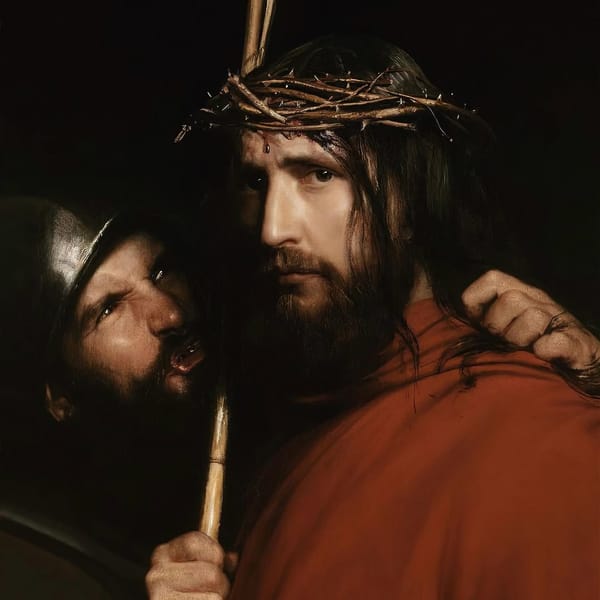
And it’s here, in this tragic moment, that you glimpse Kirk’s fallenness. The limitation of his Christianity. The moment his transcendent faith bends to the world. The moments that made Jesus weep:
“Oh Jerusalem… how often I have longed to gather my children together, as a hen gathers her chicks under her wings - but you were not willing”.
Kirk’s humanity – and his faith – displayed boundaries. Boundaries that distorted his vision. Boundaries that, more than likely, he couldn’t even see.
And yet, Kirk was still a young man, and seemingly capable of deeply Christic thought. He appeared to grasp the hope his faith offered, and from what I can tell, he largely practiced what he preached. I truly believe he would have been willing to die for his cause. But many are. And many would – and do – die for causes that Kirk opposed. A mere willingness to die for a cause does not make that cause worthy of death.
Kirk and the Ultimate Concern
I can’t help but feel, from having watched his videos, that Kirk possessed the intelligence, faith, hope and love to one day transcend his conservativeness - to place it within the compassion, redemption and salvation of the Cross. To truly embrace the one thing that can make humanity great again: a radical self-forgetting and surrender to the Absolute – however that may be symbolised.
Too often, our identities lose themselves in ideology. We’re swallowed by the void of narcissistic self-autonomy – and in desperately searching for an exit point, we only swim into darker, deeper waters. Yet, even against this separateness, this alienation from ourselves and each other - we sense truth. We feel it. The truth of love, compassion, empathy and communion. The abstract, ungraspable truth of our source. It is always there, emanating its presence - waiting patiently to be noticed. Waiting to guide us to quiet waters. To green pastures. Waiting to invite us ashore. Waiting to make us what we were born to be.
For Kirk, this presence was Christ. And I sense, in certain moments I’ve seen, that this was sincere – even potentially transformative. But tragically we will never find out how far into Christ Kirk might have gone. Tragically, for now, ‘mass-man’ wins again. And the jungle grows.
Beyond Identity: Autonomy and Surrender
So, what is the answer? Recently, in response to Tommy Robinson’s march through London - attended (apparently) by 150,000 people - Kier Starmer said, “we will never surrender our flag”. I’m not entirely sure what he meant by that, but I do think that in mentioning ‘flag’ and ‘surrender’ in the same breath, he touches on something crucial.
Perhaps Starmer has ironically identified the core of the problem, which is that we’re all grasping for something to hold onto. Some stabilising symbol worth defending in a meaningless world, performatively ruled by Ortega’s mass-man. But perhaps surrendering our flag isn’t the problem. Perhaps it’s inevitable. Perhaps the real question we must all face is this: To whom – or to what – are we surrendering it? And in doing so, to whom, ultimately, are we surrendering ourselves?
Post – Script: A Defence Against a Critical Theory Response
Critical Theory (CT) offers a deconstructed insight into power that is deeply embedded in the ideological structures which I critique in the essay. A rebuttal rooted in CT is a predictable one – but it misses the woods for the trees. That doesn't mean it lacks relevance within a materialist lens – but this essay was not written from within that paradigm.
What I am grasping for is a transcendent movement beyond the tribalism and dogmatism inherent to the humanistic and materialistic worldview that CT so brilliantly deconstructs. Something post-ideology. Something post-deconstruction.
The fundamental question I’m posing is this: once we have deconstructed the world, each other, and every institution of power - what is left? That – what remains – is where the true building blocks for morality and dialogue reside. That is where the true core of humanity shines.
To double down on CT as a total framework is to perpetuate the very conditions that produced everything Charlie Kirk symbolised. It is to regress into intellectual atomism: a belief that power is everything. It is a reinforcement of antiquated and pragmatically ineffective monist ethics and ideology – and ultimately reiterates the Ortegan idea of 'minority vs masses'. It is doubling down on decay – not escaping from it.
In this sense, Critical Theory represents a strand of ideology rooted in an economy of command and conquer. It is not a revolution, but a well-disguised reactionism – doomed to performative critique, with no capacity to transcend. And this, as above, is the tragedy: that to transcend the ideological system it exists within, would be to become obsolete. Like Kirk, it is trapped in the culture of its own death. So I ask again – who (or what) have you surrendered your flag too? Something dangerously transient? Or something terrifyingly transcendent?